
There is a particular kind of painful silence that follows church hurt. But the wound does not get to write the final chapter.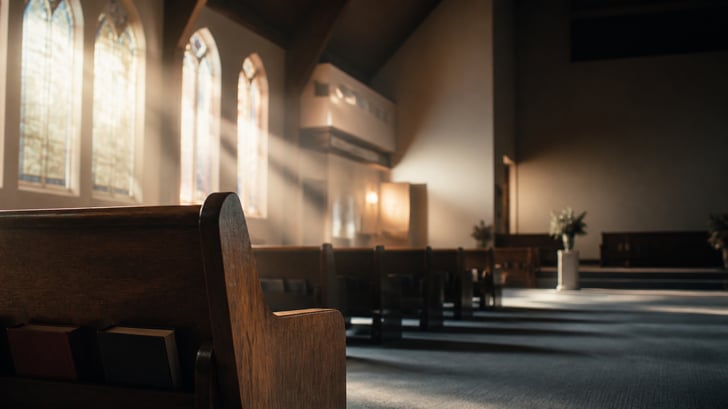
It can settle in the car after a Sunday service. It can follow us home after the meeting where our concerns were dismissed, our vulnerability was mishandled, or our loyalty was used against us. It can even sit beside us years later when a worship song, a familiar hallway, or a date on the calendar gives us a flashback to a moment we thought we'd moved beyond.
The wound is painful not just because someone offended us, but it's painful because of where it happened.
We expected the house of God to be the last safe space. We expected people who spoke about grace to practice it. We expected leadership to look like service, objective truth, transparency no matter what, and pretty much the personal characteristics listed in 1 Timothy Ch. 3. When those expectations are violated, the disappointment can bleed far beyond that specific instance and into the way we see every churchgoer, and even God.
As Journey U's Director of Marketing, I spend much of my time finding language for the hope we offer. I see Trace Modeling not only as a message to communicate, but specifically through the eyes of a graduate. I have experienced the difference between unsuccessfully coping with pain on a continuous loop in default mode, and naming the visible pain and allowing God to reveal the truth of what took root beneath it.
That distinction matters here.
Because church hurt is real. It shouldn't be minimized, spiritualized away, or covered with a veneer of forgiveness. Yet the people who wounded us do not get to become the final authority on who God is. Human failure may have distorted our view of Him; it does not define His character.
This collection's four KNOWN Conversations have carried us through that difficult space: from being wounded in the house of God, to the agreements we never meant to sign, to forgiving what we cannot forget, and finally to the anniversary God kept. Together, they point toward a truth I want every wounded believer to hear:
The church may be where the wound happened. It does not have to become the place where your faith and fellowship ends.
Church hurt often injures more than trust
Church hurt can take many forms: spiritual manipulation, exclusion, gossip, public shame, misuse of authority, ignored abuse, betrayal of confidence, racial or cultural harm, favoritism, or the quiet message that your questions make you disloyal.
Sometimes the harm is obvious. Sometimes it's difficult to explain because every individual moment appeared small, but the pattern lead to your slow fade.
The effect can surface in unexpected ways. You may feel anxious walking into a sanctuary. Praying in front of others may feel like too much pressure. Even the thought of getting ready on Sunday mornings, let alone the whole fam, feels physically and emotionally exhausting. You may question every leader's motives, pull away from community, overexplain yourself, or become determined never to need anyone again. You may still love Jesus and yet feel your emotions flip a switch when someone says, "You just need to trust."
These responses do not make you faithless. They may be evidence that a wound still needs care.
Scripture never asks us to call darkness light. Jesus is full of grace and truth. Biblical healing begins with honesty in the presence of God.
A gentle place to begin
If recurring emotional, relational, or spiritual patterns have left you wondering why you still feel stuck, take Journey U's free five-minute Root Assessment. It can help you notice what may be operating beneath the surface and identify a next step.
Take the Free Root Assessment →
The agreements we never meant to sign

In my kitchen junk drawer there are countless inoperative writing utensils; from mechanical pencils with no lead to cracked inkless pens. When I need to jot down a quick to do list, finding a working writing tool can be an unwelcome household struggle. However, when emotional pain shows up, it never arrives alone. It often brings a pen...in perfect working order.
In the moment of offense, our minds begin writing conclusions to help ourselves survive:
- I am not safe when I am honest.
- My needs are a burden.
- Authority cannot be trusted.
- If I set a boundary, I will be rejected.
- God must be disappointed in me too.
- Men and women authentically pursuing holiness just don't exist these days.
We may never say these beliefs aloud. We may not even realize we've already accepted them. But an agreement can begin shaping our choices long after the initial offense has passed.
This is why changing churches, taking a break, or avoiding the person who caused the harm, while sometimes wise and necessary, may not complete the healing. Indeed, distance can create safety. But by itself, it cannot erase the lie the wound wrote inside us.
At Journey U, we often say that patterns do not start on the surface. A recurring reaction may be the fruit of a deeper belief. If I believe that being known leads to rejection, I may keep every relationship shallow. If I believe that God is like the boss who humiliated me, I may experience surrender as danger instead of love.
Healing invites us to ask not only, What happened to me? but also:
What did I begin believing because it happened?
That question isn't blame. The harm done to you is not your fault. See it as an invitation to recover the parts of your story that pain's been interpreting without your permission.
Forgiving what you cannot forget
Forgiveness is one of the most tender subjects in any conversation about church hurt because it has often been used to rush wounded people back into unsafe situations.
Hear me loud and clear when I say: Forgiveness is NOT pretending the harm was small. It is NOT erasing consequences, bypassing grief, restoring trust on demand, or guaranteeing reconciliation. No way, Jose. Trust is rebuilt through objective truth, responsibility, repentance, evidence of changed behavior, and time. Reconciliation requires willing participation from more than one person. Safety and wise boundaries still matter. And who even says forgiveness requires reconciliation, anyways? Forgiveness is a one person job. Reconciliation requires two willing participants, and you only have control over self.
Forgiveness is a release before God. It is refusing to let another person's sin keep collecting interest inside your life. It's a literal command from our Lord Jesus Christ.
And whenever you stand praying, forgive, if you have anything against anyone, so that your Father also who is in heaven may forgive you your trespasses.
Mark 11:25 esv.
Forgiveness often happens in layers. We can make a sincere decision to forgive and still feel grief when a memory returns. Remembering is not the same as refusing to forgive. Sometimes the memory simply reveals another area that needs to be surrendered to the Lord. Remember when Peter asked Jesus if he should forgive folks seven times, and Jesus replied, "...not seven times but seventy times seven."?
The Trace Modeling framework provides a transformational rhythm that gives us a grounded way to begin the process of complete healing:
Recognize
Tell the truth about what happened and what it produced in you. Name the wound, the grief, the anger, the fear, and the beliefs that followed.
Repent
Choose to turn away from any lie or unhealthy agreement you adopted in the pain. Repentance here is not taking responsibility for someone else's sin. It's choosing not to let their sin continue directing your inner life.
Let Go
Release the offender, the debt, and the outcome to God. Letting go may include grieving what should have been, setting a boundary, or accepting that an apology may never come.
Let God
Invite God to show you the truth. Let Him restore your view of His character, renew your mind, and teach you how to walk forward without abandoning wisdom.
This rhythm is not a performance. It is a practice; a way of aligning with Christ when healing isn't instant or linear.
Create room for God with Sanctuary: a 30 day journey through church hurt
If you need a quieter, guided space to process church hurt in God's presence, Sanctuary is the ideal accompaniment for this collection. Use the devotional to slow down, engage Scripture, pray fearlessly, and make room for God to meet you without pressure or pretense.
Purchase the Sanctuary Devotional →
The anniversary God kept
Some dates remember us before we remember them.
An anniversary can arrive in the body first: disrupted sleep, a tight chest, unusual irritability, an urge to withdraw. We may wonder why old emotions are resurfacing when we've prayed, forgiven, and grown.
But an anniversary isn't always evidence that healing failed.
Sometimes it is a marker showing us how far God has carried us.
The date may still hold sorrow, but it can also hold a testimony: I am still here. God was present in what I could not yet understand. What once controlled my entire world is now one part of a larger story He is still redeeming.
God's faithfulness doesn't always look like preventing the wound. Sometimes it looks like keeping us through it; preserving our capacity to love, returning our voice, teaching us discernment, and separating His face from the faces of people who misrepresented Him.
Isaiah 61 speaks of God binding up the brokenhearted and rebuilding places long devastated. That promise doesn't romanticize ruins. It tells us ruins are not beyond His reach.
When you are ready to be known again
Healing from church hurt can feel lonely, especially when community is part of what became unsafe. But isolation doesn't have to be your permanent protection.
KNOWN is Journey U's monthly coaching, healing and discipleship community. It's a place for honest, Scripture-centered Conversations, guided reflections, prayer, and practical next steps. Each month, one Collection gives us room to slow down and ask the question many people carry but have never felt safe enough to say aloud.
You don't have to arrive put together. You do not have to force a testimony before you've finished grieving. You can begin where you are and practice healing as a lifestyle: listen, abide, reflect, practice, and freely live.
When the pattern points to a deeper root

KNOWN can help us recognize patterns and establish ongoing rhythms of healing. For some, that recognition reveals a readiness to go deeper.
Church hurt may have touched an earlier wound of rejection. A controlling leader may have reinforced a belief formed in childhood. Being silenced in ministry may have connected with years of learning that love must be earned through performance. The present pain is real; and it may also be connected to roots that reach further back.
Trace Modeling is Journey U's structured, biblical framework for that root-level work. Instead of focusing only on the behavior or symptom, it helps uncover the beliefs, wounds, and thought patterns beneath recurring emotional, relational, and spiritual struggles.
I believe in this work not only because I help communicate it, but because I completed it. Trace Modeling gave me a framework for recognizing what was operating beneath the surface, bringing it into the light of biblical truth, and partnering with God in a new way. Information can explain a pattern. Root-level healing can change the way we live for generations to come.
If you keep experiencing the same fear in different relationships, the same shame in different rooms, the same instinct to disappear whenever you feel exposed, or you're just plain tired of feeling stuck, you may not need more pressure to "move on" or "just get it together". You may need a safe, guided way to discover the root of the pattern, and what God wants to heal.
Explore the Trace Modeling Journey →
One next step
You don't have to solve your entire relationship with the Church today.
Your next step may be telling God the truth without editing it. It may be naming an agreement you no longer want to live under. It may be forgiving without reopening access, seeking wise counsel, or reporting misconduct. And if you're currently unchurched, I encourage you to find a local, Bible based church where Jesus, Scripture, the fruits of the Spirit and accountability and are taught and practiced.
If your experience involved abuse, coercion, threats, criminal conduct, or an immediate safety concern, spiritual reflection should not replace qualified professional, pastoral, legal, or emergency support. Seeking help is not betrayal. Truth and safety matter to God.
Wherever you are, begin with this:
Jesus, show me what this wound taught me to believe. Help me release what is not true, receive what You say, and take one wise step toward freedom.
Healing is not the end of your story. It is the foundation from which you can become more fully who God created you to be.
And the God who met you in the wound is still able to keep you through the anniversary, restore what pain distorted, and lead you forward; known, discerning, and free.